Our story
Built in the wet lab, designed for it.
We started Proteinvue because we kept watching smart protein engineers drown in assay plates while the useful sequences were already there in the fitness landscape.
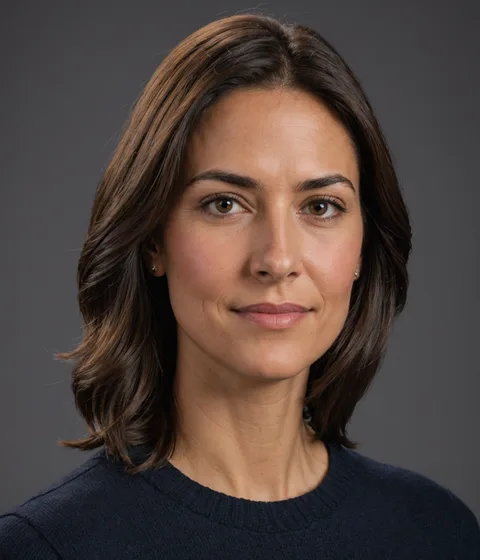
Elena Marchetti, CEO and Co-Founder
How Proteinvue started
Elena Marchetti's doctoral work at Johns Hopkins focused on how fitness landscapes constrain protein evolution. Her research used evolutionary sequence analysis and co-variation statistics to understand why certain mutations are tolerated and others are not. She was working with the same class of models that would eventually drive protein language models, years before they became a tool category.
After finishing her PhD, Elena spent three years in an academic protein engineering lab working on antibody optimization. The problem she kept watching was the same one: the team was running 64-well plates on CDR variants that a careful MSA analysis would have deprioritized weeks before synthesis. Each plate that failed cost grant-funded time and consumables. The bottleneck was not biology. It was the absence of a ranked signal before the assay.
In 2024, Elena co-founded Proteinvue with Marcus Osei-Bonsu, whom she met through a computational biology meetup in Baltimore. Marcus had been building sequence models and training pipelines at a biotech data science team and had arrived at the same conclusion independently: the protein engineering community needed a practical tool that worked with FASTA files and CSVs, not a research prototype requiring bespoke bioinformatics infrastructure.
They chose Baltimore to stay close to the Hopkins and UMBC research corridor and to remain near the academic protein engineering labs that understood the problem from the inside. Proteinvue is bootstrapped, focused on one product that does one thing: tell you which sequences to test before the assay runs.
The team
Elena Marchetti
CEO and Co-Founder
PhD in biophysics from Johns Hopkins, focused on evolutionary sequence analysis and co-variation statistics. Three years in academic protein engineering before co-founding Proteinvue in 2024.
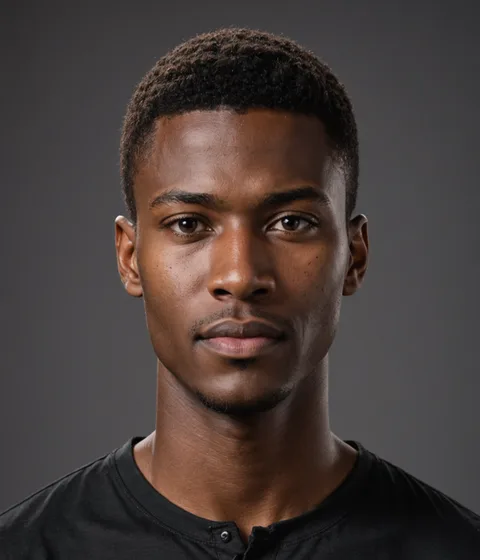
Marcus Osei-Bonsu
Co-Founder and ML Lead
ML engineer who built sequence model training and inference pipelines at a biotech data science team before co-founding Proteinvue. Owns the generative model architecture, retraining schedule, and scoring API.
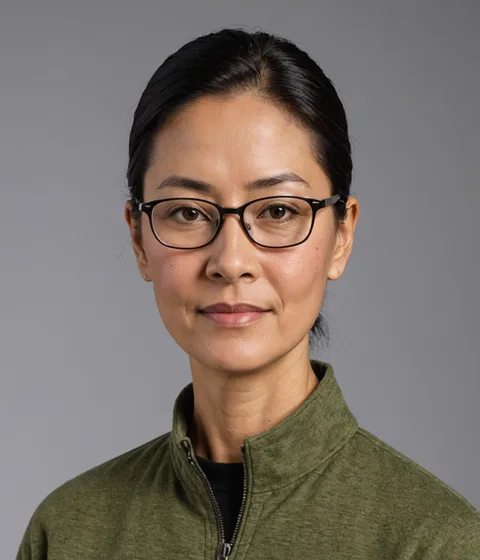
Dr. Yuki Tanaka
Protein Science Advisor
Structural biologist with expertise in enzyme mechanism and antibody biophysics. Advises on training data curation, retrospective validation design, and whether a given protein family is a tractable fit for co-variation-based design.
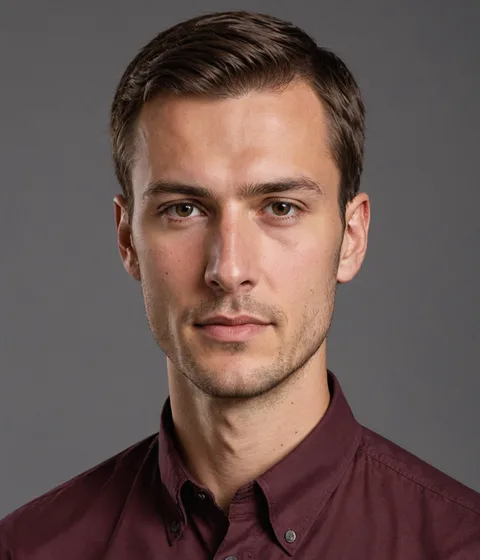
Sasha Kowalczyk
Full-stack Engineer
Builds the platform interface, job queue, and delivery pipeline that takes model outputs from the scoring API and packages them into the FASTA, CSV, and mutation matrix deliverables researchers receive.
Our mission
"Every assay plate that runs blind is a grant, a quarter, a hire that did not happen."
Protein engineering is not a slow science. It is an information-poor one. Sequence space is combinatorially vast and each wet-lab cycle costs real consumables, real time, and real grant runway. The teams that move faster are the ones who go into the assay with a ranked signal, not a gut feeling about which CDR position to probe.
We built Proteinvue to reduce the informational poverty that drives wet-lab trial-and-error. Not to replace experimental biology, and not to claim that a generative model eliminates the need for wet lab validation. The biology still has to work. Our job is to make sure the sequences on your assay plate are the ones most likely to teach you something useful.
Where we work
Baltimore, MD 21230
[email protected]
+1 (410) 638-2714
We are based in Baltimore and work with research teams remotely across the US. Initial conversations happen over video or email. We do not require in-person meetings before a program starts. If you are at a Hopkins or UMBC-adjacent lab and want to meet in person, we are open to that too.